- BeyondTheCart
- Posts
- Buy with AI: 700M users, zero clicks
Buy with AI: 700M users, zero clicks
ChatGPT launched checkout for Etsy, and over 1M Shopify stores are next. Meanwhile, PayPal's Honey is intercepting every AI shopping query to show you better deals, and 91% of SMBs using AI just reported revenue growth. The race for AI commerce just went from theory to your checkout page.

Nicholas Hoddevik
October 15, 2025

🛠 TOOL WORTH TESTING: ChatGPT Instant Checkout
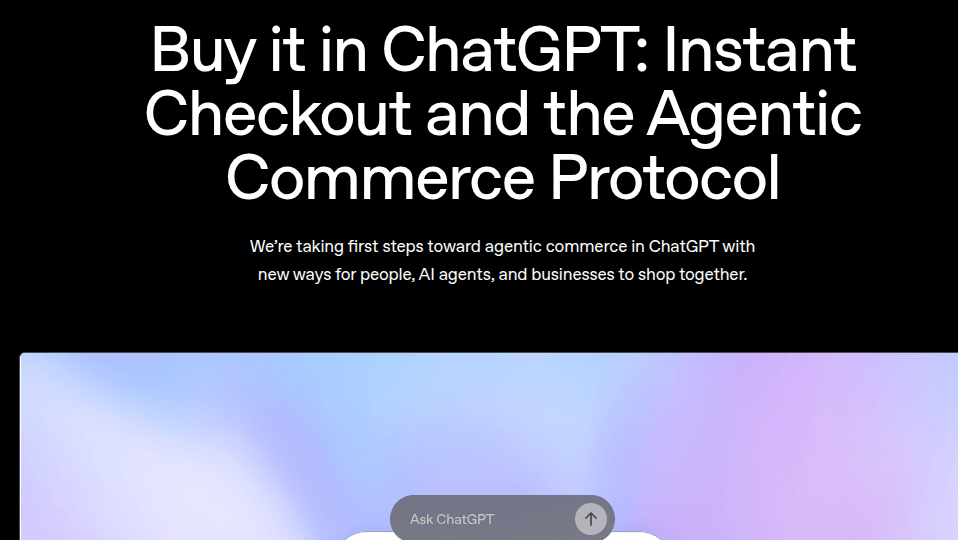
What it is: Buy products directly inside ChatGPT conversations—no clicking out to merchant sites.
The play: U.S. ChatGPT users can now purchase from Etsy sellers right in chat, with over one million Shopify merchants including Glossier, SKIMS, and Vuori coming soon. OpenAI takes a small fee from completed transactions, creating a potential new revenue stream.
Why it matters for you: With 700 million people using ChatGPT weekly and Etsy having only 93 million active buyers, even 1% ChatGPT adoption represents 7 million potential new customers—nearly 8% of Etsy's user base. If you're on Shopify, this could be a new discovery channel where customers find you while asking "best gifts under $75."
The catch: Orders, payments, and fulfillment are handled by the merchant using their existing systems—ChatGPT simply acts as the user's AI agent, securely passing information between user and merchant. You keep control, but now you're competing for attention inside AI conversations, not just Google searches.
Your move: If you sell on Etsy, monitor your traffic sources for "ChatGPT" referrals starting now. Shopify merchants: watch for OpenAI's merchant application portal (live already) and get in line.
📈 OPERATOR PLAYBOOK: PayPal Honey's AI Shopping Intercept
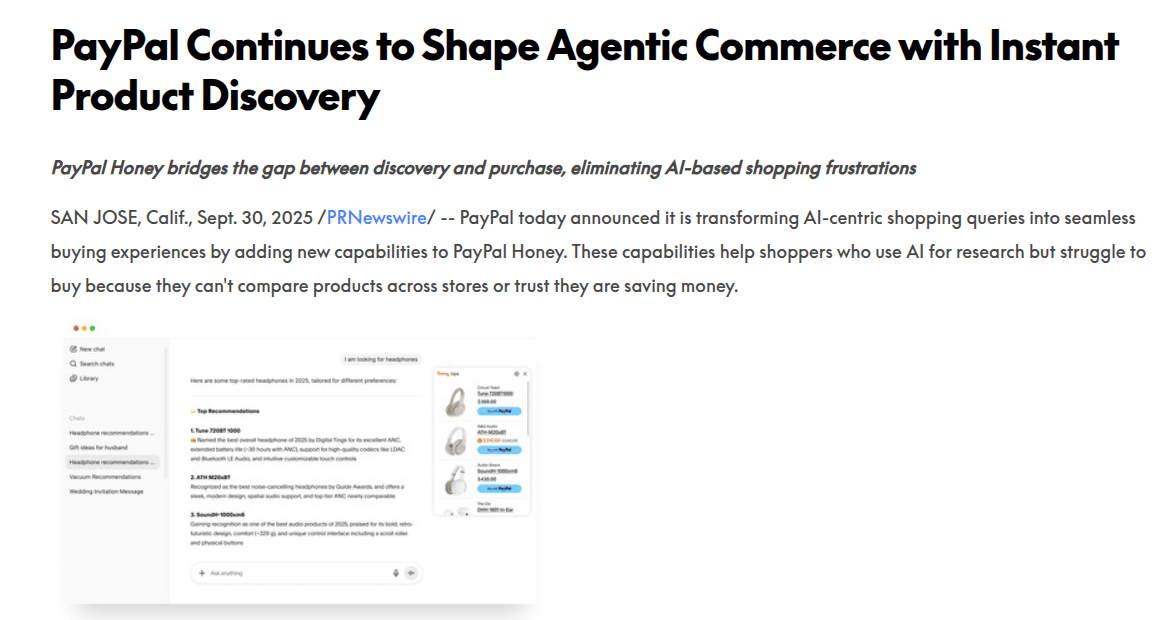
The setup: PayPal just transformed Honey from a coupon finder into a commerce intelligence platform that intercepts AI shopping queries. When users ask ChatGPT "show me coffee makers under $100," Honey's extension displays AI-recommended products with real-time pricing, merchant options, and exclusive offers.
What's happening: With 61% of U.S. adults now using AI tools and 46% enthusiastic about AI's impact on shopping, Honey bridges the gap where AI recommendations leave shoppers stuck—they can discover products but struggle to compare prices across retailers.
The operator angle: Honey's system can identify when AI recommendations exclude major retailers and automatically surface additional options that may provide greater value to consumers. Translation: If ChatGPT recommends your competitor's product, Honey might show yours alongside with a better deal.
Smart play for stores: At launch, users follow Honey's link to the merchant's website to complete transactions, but PayPal says the feature will soon include a built-in "Buy with PayPal" button for direct checkout. Stores that optimize for PayPal checkout and offer Honey-compatible deals could capture AI-driven traffic converting at merchant sites, not just inside chatbots.
Black Friday timing: These features roll out to U.S. Honey users ahead of Black Friday, starting with Google Chrome on desktop and expanding to other browsers in coming months.
Your move: If you don't already accept PayPal, add it before Black Friday. Optimize your pricing to be competitive when comparison engines surface your products. Consider running Honey-exclusive deals to stand out when AI shoppers get presented with 5+ options.
Source
🔢 NUMBERS THAT MATTER: The 91% Revenue Growth Gap

91% of small and medium businesses using AI report revenue growth, while 86% show improved margins, according to Salesforce's survey of 3,350 SMB leaders.
The split: 83% of growing SMBs are experimenting with AI, compared to just 75% overall—and 78% of growing businesses plan to increase AI investment next year versus only 55% of declining peers.
What they're actually doing: 89% of merchants say AI helps reduce time spent on repetitive tasks, freeing them to focus on strategic growth. 61% of B2B ecommerce businesses already use AI across their platforms, with key applications in personalization, content generation, and customer service.
The reality check for $500k-$15M stores: Tools like Gorgias, Relewise, and Inventory Planner offer scalable plans that start affordably, and most apps are built for non-technical users with plug-and-play installation. The barrier isn't cost or complexity—it's decision paralysis.
What this means: The gap between growing and stagnant stores isn't "will we use AI?" but "which AI tasks unlock our bottlenecks?" Support automation, personalized search, and inventory forecasting are the low-hanging fruit driving actual margin improvement.
Your move: Pick one repeatable task consuming 5+ hours weekly (FAQ responses, product descriptions, or inventory reorders). Test one AI tool for 30 days. Track time saved and revenue per hour of freed capacity.
Source
👀 EDGE SIGNAL: AI Shopping Demand Outpacing Supply
70% of shoppers globally want retailers to offer AI-powered shopping features, according to DHL's survey of 24,000 online shoppers across 24 markets. Virtual try-ons, AI-powered shopping assistants, and voice-enabled product search top the list of features consumers actively want to use.
The disconnect: Only 53% of ecommerce companies have integrated AI into their operations. That's a 17-point gap between what shoppers expect and what stores deliver.
For context: 87% of ecommerce businesses have a social media presence, and 76% expect social sales to grow over the next five years. Businesses clearly invest where customers are—but most haven't caught up to where customers want to go with AI-assisted shopping.
Why this matters now: With 78% of B2B retailers expecting website sales to grow and Black Friday approaching, 84% of retailers will participate in 2025, with 60% reporting year-over-year sales increases. Stores that deploy even basic AI features (smart search, product recommendations, chatbots) before peak season could capture demand competitors are missing.
The edge play: Customers already expect AI help. Most stores aren't providing it. You don't need cutting-edge tech—just functional AI product discovery and basic automation. That's enough to stand out in Q4.
Your move: Add one visible AI feature before Black Friday. A chatbot for product questions, AI-powered site search, or personalized product recommendations. Make it obvious: "Ask our AI assistant" or "AI-recommended for you."
📈 OPERATOR PLAYBOOK: Real SMB Results (Not Hype)

iParts (Poland eCommerce business): Used GetResponse to automate email marketing and abandoned cart campaigns. Result: Open rates for abandoned cart emails increased 30%, and 20% of recipients made a purchase.
Setup: Automated promotional campaigns and seasonal flows. No custom code, just structured triggers on existing customer behavior.
ZUS Coffee (APAC Commerce SMB): Deployed Klaviyo segmentation and automated flows including abandoned cart, using predictive analytics to time messages. Result: 107% year-over-year ecommerce revenue growth, with 47% of revenue attributed to Klaviyo-influenced channels.
The pattern: Both stores started where data already exists (browsing, cart, purchase events) and let AI act on existing triggers. No need to restructure operations—just add intelligence to what's already happening.
Coffee Beanery (DTC Coffee Brand): Implemented Klaviyo automations and Customer Hub to personalize journeys. Result: 29% ecommerce revenue growth in the first quarter, plus $8,000+ directly from Customer Hub in two months.
Lesson: Even mature DTC brands unlock quick wins by tightening post-purchase and replenishment flows.
What operators actually do: They don't chase "AI strategy." They identify one workflow (abandoned cart, reorder reminders, FAQ responses) and automate it. Measure incrementality. Scale what works. Repeat.
Your move: Choose one proven use case from these examples. Set up a 30-day pilot. Track attributed revenue. If it hits positive ROI, expand to the next workflow.
🧞 What did you think?We’re building this for lean eCom teams like yours — hit reply if you’ve got feedback, tips, or want to share something cool for a future issue. |
There’s no shortage of AI newsletters out there — but I couldn’t find one made for small and mid-sized eCom operators. So I built the kind of thing I’d want to read. Hope you get something useful out of it.
Thanks for reading.
Catch you next week!
Nicholas Hoddevik
CEO, apparel brand Kattnakken
Editor, BeyondTheCart